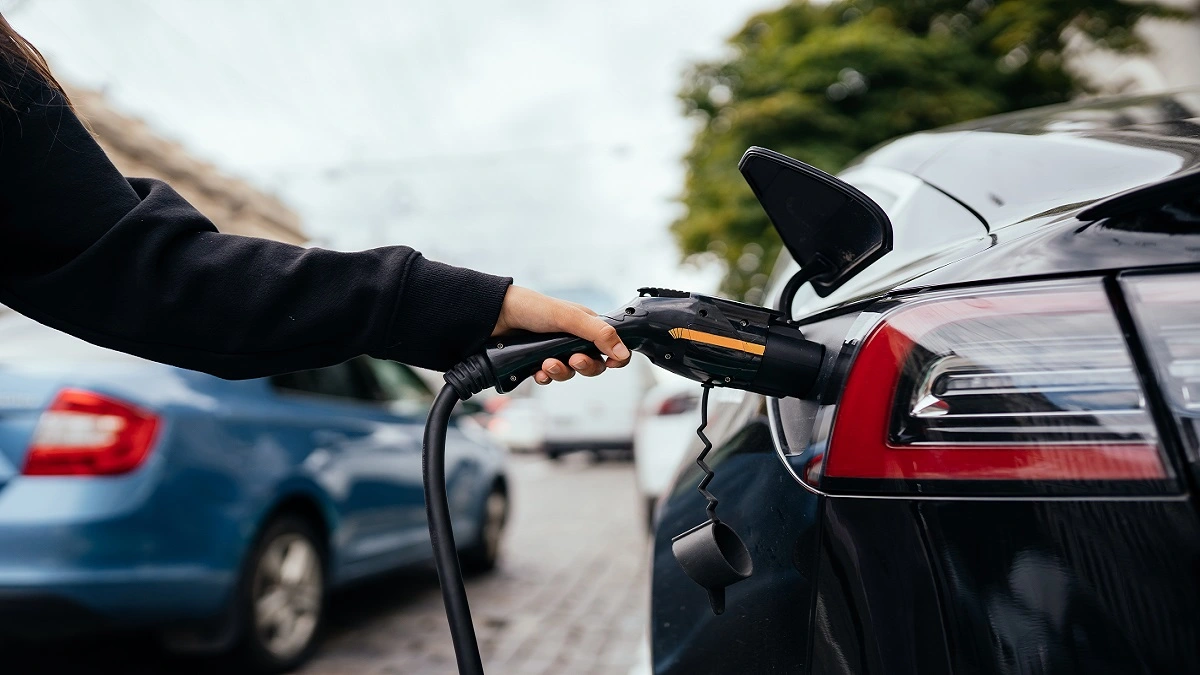
Imagine a world where silent, clean cars dominate highways, charging stations replace gas pumps, and cities breathe easier thanks to zero-emission transportation. That world is no longer a distant vision — it’s unfolding right now. The rise of Electric Vehicles (EVs) marks one of the most transformative shifts in modern mobility, reshaping industries, economies, and the way people travel.
From luxury sedans to everyday commuter cars and even commercial fleets, EVs are redefining what it means to drive. As global environmental goals tighten and technology matures, 2020 stands as a pivotal year for electric mobility — where sustainability, innovation, and convenience meet.
Whether you’re a car enthusiast, an investor, a policymaker, or simply curious about how the future of transportation looks, this guide explores everything about the rise of electric vehicles: how they work, why they’re booming, their impact on the world, and what lies ahead.
What Are Electric Vehicles (EVs)?
An Electric Vehicle (EV) is any vehicle powered partially or entirely by electricity rather than gasoline or diesel. Instead of an internal combustion engine, it uses an electric motor powered by rechargeable batteries.
There are three main types:
| Type | Description | Example Models |
| Battery Electric Vehicle (BEV) | Fully electric, powered only by a battery. | Tesla Model 3, Nissan Leaf, Rivian R1T |
| Plug-in Hybrid Electric Vehicle (PHEV) | Combines battery-powered electric drive with a gasoline engine. | Toyota Prius Prime, Volvo XC60 Recharge |
| Hybrid Electric Vehicle (HEV) | Uses both an engine and a small electric motor but doesn’t plug in. | Toyota Corolla Hybrid, Honda Insight |
EVs operate quietly, produce no tailpipe emissions, and often cost less to maintain due to fewer moving parts compared to conventional vehicles.
The Concept Behind the EV Revolution
The EV revolution isn’t just about swapping engines; it’s a complete reimagining of how transportation fits into society’s sustainability goals.
Here’s why it matters now:
- Climate change urgency: Transport contributes about 24% of global CO₂ emissions. EVs can drastically cut this footprint.
- Technological maturity: Advances in battery chemistry, range, and charging speed make EVs practical for the average driver.
- Policy pressure: Many governments aim to ban new internal combustion vehicle sales by 2035 or earlier.
- Consumer awareness: People are increasingly aware of their environmental impact and energy costs.
- Economic transformation: EVs are creating new industries — from battery recycling to software-driven vehicle systems.
In short, electric vehicles represent both a technological breakthrough and a cultural turning point.
Key Features Driving the Rise of Electric Vehicles
Let’s break down what makes EVs so compelling — and why they’re gaining mass adoption worldwide.
1. Zero Emissions and Environmental Impact
EVs emit no tailpipe pollutants, helping reduce smog, greenhouse gases, and urban pollution.
When powered by renewable electricity, their lifecycle emissions are 60–70% lower than conventional cars.
2. Lower Operating Costs
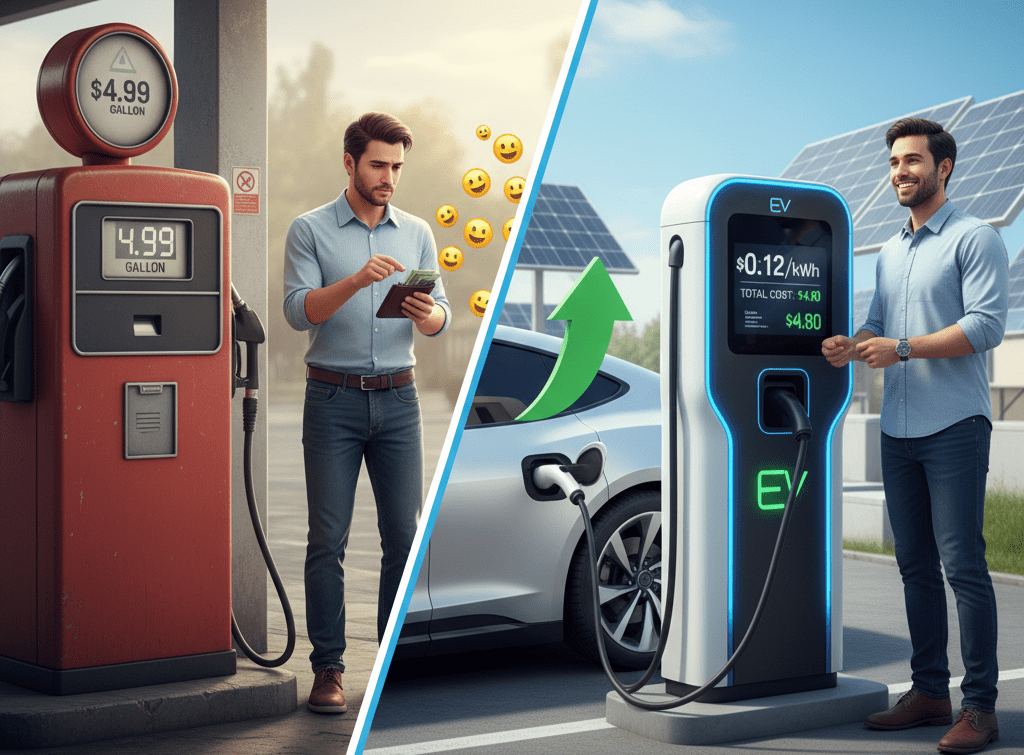
EVs are cheaper to “fuel.”
- Electricity per mile costs roughly 1/3 of gasoline.
- Maintenance costs are lower since there’s no oil change, exhaust system, or spark plug.
3. Battery Efficiency and Range
Modern EVs can travel 300–500 miles per charge, with new models (like Tesla’s Cybertruck or Lucid Air) pushing the limits further.
Solid-state batteries — expected to scale by 2026 — will further enhance range and reduce charging time.
4. Fast and Convenient Charging
Charging infrastructure has expanded rapidly:
- Home charging: 80% of EV owners charge overnight.
- Public fast chargers: Add 200+ miles of range in 20–30 minutes.
- Ultra-rapid stations (350kW): Becoming standard in developed markets.
5. Smart Connectivity
EVs are software-driven — from over-the-air updates to integrated apps tracking battery health and routes.
Many integrate with renewable home systems (like solar panels) for energy self-sufficiency.
6. Performance and Torque
EVs deliver instant torque and smooth acceleration.
For example, the Tesla Model S Plaid accelerates from 0–60 mph in 1.99 seconds, rivaling supercars.
7. Government Incentives
Tax credits, rebates, and green policies are key drivers.
In the U.S., EV buyers can receive up to $7,500 in federal tax incentives; Europe and Asia offer similar programs.
The Global EV Market: Where We Stand in 2020
| Region | EV Adoption (2020 Est.) | Key Drivers |
| Europe | 35–40% of new car sales | Stringent CO₂ targets, incentives, charging infrastructure |
| China | 50% of new car sales | Strong government support, domestic brands like BYD and NIO |
| United States | 25–30% of new car sales | Federal tax credits, Tesla dominance, GM & Ford expansion |
| Asia-Pacific (ex-China) | 20% average | Emerging markets ramping up production and imports |
Global EV sales to surpass 14 million units until 2024, up from 3 million in 2020 — a near fivefold increase.
Why the World Is Switching to Electric Vehicles
The rise of EVs isn’t just about environmentalism; it’s a convergence of economics, innovation, and necessity.
| Factor | Impact |
| Rising fuel prices | Push consumers toward cheaper, stable electricity |
| Urban air pollution | Governments restrict ICE vehicles in city centers |
| Battery breakthroughs | Lower costs make EVs price-competitive |
| Public perception | EVs seen as modern, clean, and technologically advanced |
| Corporate commitments | Fleets moving to 100% electric (e.g., Amazon, FedEx, UPS) |
By 2030, analysts project over 200 million electric vehicles on the road globally.
Challenges Facing the EV Industry
Despite the momentum, several obstacles remain before EVs dominate the market fully.
| Challenge | Description | Mitigation Strategy |
| Charging Infrastructure Gaps | Rural and developing areas lack chargers. | Government-private partnerships to expand charging networks. |
| Battery Supply Chain | Dependence on lithium, cobalt, nickel. | Investment in recycling and alternative chemistries. |
| High Upfront Costs | EVs remain costlier than ICE equivalents. | Falling battery costs and subsidies will close the gap. |
| Grid Demand | Increased electricity consumption. | Smart grids and renewable integration to balance loads. |
| Consumer Misconceptions | Range anxiety, charging myths. | Education campaigns and real-world data sharing. |
Addressing these challenges is crucial for sustainable, equitable EV adoption.
EVs vs Traditional Vehicles: Side-by-Side Comparison
| Feature | Electric Vehicles | Internal Combustion Vehicles |
| Energy Source | Battery (electricity) | Gasoline/Diesel |
| Emissions | Zero tailpipe | CO₂, NOx, pollutants |
| Fuel Cost (per 100 miles) | $3–$5 | $12–$15 |
| Maintenance | Low (fewer parts) | High (engine upkeep) |
| Noise | Nearly silent | Loud combustion |
| Performance | Instant torque | Delayed acceleration |
| Energy Efficiency | ~90% | ~25% |
| Sustainability | High (esp. with renewables) | Low |
EVs are winning not just on eco-friendliness but also on efficiency, technology, and comfort.
Economic and Industrial Impacts
The EV boom is reshaping industries across sectors:
1. Automotive Manufacturing
- Legacy automakers like Ford, GM, and Volkswagen are converting factories for EV production.
- Startups (Rivian, Lucid, NIO) are disrupting traditional players.
2. Energy and Utilities
- Demand for renewable energy is rising alongside EV adoption.
- Vehicle-to-grid (V2G) systems allow cars to supply power back to homes or the grid.
3. Mining and Battery Production
- The race for lithium, cobalt, and nickel has triggered global investment.
- Companies are focusing on battery recycling to reduce resource pressure.
4. Software and AI Integration
- EVs rely heavily on software for diagnostics, route optimization, and energy management.
- Autonomous EVs are becoming the next frontier.
The Role of Policy and Government
Policies play a critical role in accelerating EV adoption.
| Region | Key Policy Highlights |
| European Union | Ban on new ICE sales by 2035; strong CO₂ penalties |
| United States | $7,500 tax credits, nationwide charging plan, EV incentives for federal fleets |
| China | Subsidies for domestic producers; focus on battery tech |
| India | FAME II initiative promoting EV manufacturing and charging infrastructure |
Governments are not just encouraging adoption but mandating transformation.
The Environmental Benefits of EVs
1. Lower Greenhouse Gas Emissions
A mid-sized EV emits roughly half the CO₂ over its lifetime compared to a petrol car, even accounting for battery production.
2. Reduced Air and Noise Pollution
Cities adopting EV fleets have recorded up to 30% drop in urban air pollutants.
3. Energy Independence
Shifting from imported oil to local renewable energy sources enhances national security and stability.
The Future of EV Technology
The EV evolution doesn’t stop with today’s models. Here’s what’s shaping the next wave:
| Innovation | Expected Impact |
| Solid-State Batteries | Safer, higher energy density, faster charging |
| Wireless Charging Roads | EVs charge while driving |
| AI-Powered Driving Systems | Energy-efficient routing, autonomous mobility |
| Battery Recycling Plants | Circular economy and cost reduction |
| Vehicle-to-Grid Integration | EVs as mobile energy storage units |
By 2030, the EV ecosystem will integrate seamlessly into smart cities and renewable energy grids.
Consumer Perspective: Should You Switch to an EV Now?
Advantages
- Lower long-term costs
- Clean, quiet, tech-savvy driving experience
- Government rebates and reduced taxes
- Resale value improving yearly
Considerations
- Home charging setup cost
- Availability of fast chargers in your region
- Initial price higher (though falling fast)
In most regions, EVs already offer total cost parity with gas cars within 3–5 years of ownership.
Common Problems and Quick Fixes
| Problem | Cause | Fix |
| Slow Charging | Faulty connection or low-voltage socket | Check outlet or use certified charger |
| Range Drops Suddenly | Weather or high-speed driving | Drive moderately, preheat battery in cold weather |
| Charging Station Incompatibility | Connector mismatch | Use adapter or compatible cable |
| Software Glitches | Firmware lag | Install updates via manufacturer app |
| Battery Degradation | Overcharging or deep discharges | Keep battery between 20–80% charge routinely |
Modern EVs are remarkably reliable once properly maintained.
EV Adoption Forecast: The Road Ahead
| Year | Global EV Market Share | Key Milestone |
| 2020 | 25% | Widespread adoption in Europe & China |
| 2030 | 50% | Cost parity achieved globally |
| 2040 | 80–90% | Dominant mobility mode worldwide |
By 2040, fossil-fuel cars will be niche — reserved for collectors or specialized use cases.
Frequently Asked Questions (FAQ)
Q: Are electric vehicles really better for the environment?
A: Yes. Even factoring in battery production, EVs produce 50–70% less CO₂ over their lifetime compared to combustion cars, especially when charged with clean energy.
Q: How long do EV batteries last?
A: Most EV batteries last 8–15 years or 150,000–300,000 miles. Many manufacturers offer 8-year warranties.
Q: What happens to old EV batteries?
A: They are either recycled for materials or repurposed for energy storage systems.
Q: Can EVs handle long trips?
A: Modern EVs can easily handle long distances with nationwide charging networks now covering most major routes.
Q: Are EVs more expensive to insure?
A: Slightly, due to repair costs, but this is decreasing as parts and expertise become more common.
Final Thoughts: The New Era of Sustainable Mobility
The rise of electric vehicles marks a historic shift — not just a change in technology, but in mindset.
It symbolizes human innovation meeting environmental responsibility.
EVs are no longer futuristic; they’re here, affordable, and essential. Governments, corporations, and individuals are aligning toward a common vision — cleaner air, smarter cities, and sustainable growth.
For drivers, the choice to switch is becoming obvious. For industries, it’s a race to adapt.
And for the planet, it’s a step toward survival.
As charging networks expand, battery technology matures, and renewable energy scales, electric vehicles will redefine transportation as we know it — silent, efficient, intelligent, and sustainable.
The electric age of mobility has begun — and there’s no turning back.